Gorillaz’ debut album, self-titled, was modest where the virtual band’s since-established partiality to collaboration is concerned. While Del the Funky Homosapien (Clint Eastwood / Rock the House) and Miho Hatori (19/2000 and several others) were crucial to 2-D and company’s starting point – the former’s varied, personality-driven raps and the latter’s new age, cool shoeshine quirkdom – the Gorillaz extended family has since grown.
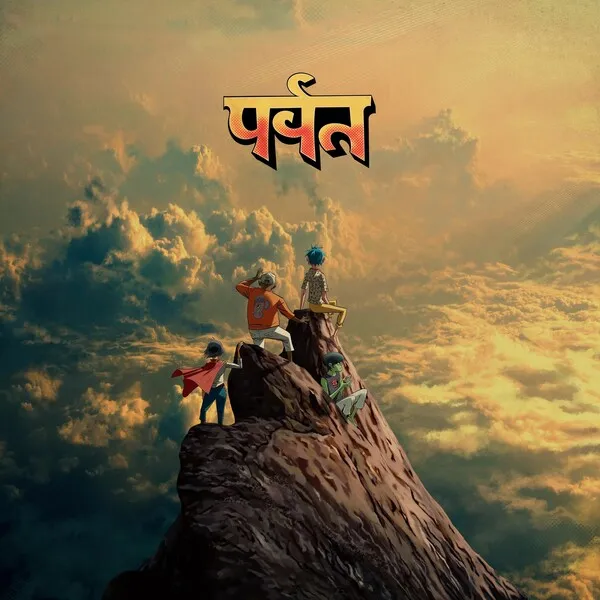
The Mountain is a tribute to that family; family that has left us, family that is still with us, new family and family that could have been. New friends and new cultures arrive over a feature-packed devotion to Carnatic music, the authenticity of which is owed to the album’s battalion of Indian musicians.
“The hardest thing is to say goodbye to someone you love”. The Hardest Thing’s Tony Allen-featured elegy and Orange County’s whistling under Saltoro Kangri transparently direct Damon Albarn’s mourning, while recycled snippets of those passed prefer to keep memories moving.
The album builds, not a home for memories, but a world. While straight preservation is considered vital for some – Delirium contains the most Mark E. Smith vocal known to impressionists everywhere, but in true, wonderfully neurotic style, it’s a bloody good thing; so fun in its booming erraticism – many of the departed voices used become one with the Hindustani spiritualism of the album, which is, you know, fitting for Hindustani spiritualism.
One may remember Dennis Hopper’s spoken-word story on Demon Days, of a mountain called Monkey. His utterance of the word “mountain” is heard frequently on the title track of The Mountain, as an outtake of his is recycled. Just as common is the word “serenity”, which is damn appropriate for a piece dominated by the most serene instrumentation; bansuri flutes, sarods and sitars, which apply touching, sprawling melodies that sound like a forest opening up, and a mountain rising.
With these new surroundings, which usually double Carnatic folk (among other forms of Asian music) with synthpop, the album is able to get something different out of a few of its guests. Idles’ Joe Talbot appears even more menacing buddying up to kooky, exotic psychedelia on The God of Lying as he does giving his usual hardcore punk business, in his witchdoctor era. Yasiin Bey juggles some of the most System of a Down-esque lyrics imaginable – “Hallelujah holler, Faddal, yalla, Turkish coffee, Starbucks, get off me” – on Damascus, colouring its eventful, Dabke footwork as Omar Souleyman shrieks like a priest, with a nasal refrain that charismatically grooves with computerised, Middle Eastern instrumentation.
Trueno’s performance on The Manifesto is a standout. The surprise of Proof (of D12 / Eminem hype man fame) rocking up over a flutey, folksy instrumental should be enough, but Trueno slips a memorable, reggaeton vocal style into the organic-sounding arrangements that make me wish Bad Bunny sung over similar music. His later rap begins as elephant trunk trumpets do; it’s one of the most jaw-dropping moments of the entire Gorillaz canon, as big as a policeman’s bum.
If I were to give an MVP award where guest vocalists are concerned, I’d likely give it to Black Thought, who duets with the spirit of Gorillaz favourite Trugoy the Dove on The Moon Cave, gives one of his most poignant non-Roots verses on the solidarity-clinging The Empty Dream Machine (“black-like spirits, black-like Krishna / or black like a deity that’s trapped like a prisoner”), and visualises paradise with the skilful romanticism of an old poet on doo-woppy finale The Sad God, which is like Blueberry Hill for the lost spirits of those buried under it; a heart-wrenching way to say goodbye, the hardest thing to do.
Damon is also accommodating on The Mountain. He makes sure to bring his quirkiest childlike vocal melodies to welcome Sparks on The Happy Dictator – dig Russell Mael’s backing vocals that whoosh like those of a jolly ghost, and dig the big upswing in mood on the chorus; a IV into tonic that brings hope and joy.
Not everybody builds a world like this, a distinction that shields The Mountain from any naysayers. This world allots The Mountain the most character, even purpose, a single Gorillaz album has obtained since perhaps Plastic Beach, and this is coming from a big fan of Song Machine, Season One.
With that in mind, perhaps one could only consider The Mountain a bad album if they feel Gorillaz should sound far more extroverted than this; while there is little you could consider more outgoing than exploring the foundation of an entire subcontinent, listeners were brought up on trip hop, indietronica and dub.
But this is simply a new take on the old style. Song Machine proved that Gorillaz could just make a party album and be great, but The Mountain proves that Gorillaz is at its best when unpredictable and undefined – this is an animated band unconfined by reality like their music is unconfined by genre.
I’ll say what we’ve been saying for twenty-five years; Gorillaz can be anything. In 2026, Gorillaz is as genre-bending as ever, as international as ever, and through unbound cultural wisdom, the outfit has produced one of its very best albums.
Best tracks – The Happy Dictator – The Manifesto – Delirium – Damascus – The Sad God.
Rating – 9 out of 10
