Nothing’s About to Happen to Me presents crisis in multiple forms. By concept alone, Mitski’s eighth album is a hymnbook for the shut-in, lonely in seclusion but empowered by the independence that comes with. The recluse’s musical accompaniment faces the crisis Mitski always has; fearfully, she is seldom decided on what she is as a musician, leaving her musical language up to her subconscious. Her talent, heart, and refined methods of shrugging the weight of the world from her shoulders work together to remind us that, not only is Mitski one of the few popular artists capable of using indecision to her betterment, but the ensuing open mind always results in her best work.
But hey, maybe that’s because Nothing’s About to Happen to Me is, in many ways, deeply reminiscent of Mitski’s best moments, including my personal favourite Puberty 2, albeit far less raw. I have found a few of the albums released since to be a tad too reserved; lean melancholy that relies too much on Mitski’s softness, which is the basis of this album, but the canvas is filled by the end.
The country camouflage of Charon’s Obal would’ve gone unnoticed on any post-Puberty 2 album, but Mitski revisiting her fascination with country is a likeable quirk on Nothing’s About to Happen to Me. Thank her charming songwriting style, her best, always-moving chord progressions and melodies that lunge a subtle lunacy even in the album’s whispers. Her writing assists whichever chunk of her brain she favours in the moment, whether country, distorted crescendos, or songs about cats – she looooves songs about cats, and don’t we all?
Rules is a daft country song – a rare display of corniness – but Charon’s Obal wishes it had its personality. Whimsically, Mitski does a lot of counting on the song, and an incredibly brief fanfare plays for a couple of bars as if she just picked up an extra life in Sonic 3. In a Lake is a morphic country song, crafting a course with accordion and standout lyrics such as “it’s like one brand of soap’s sold in town / ‘cause anyone you can get close to smells like your first time around”, before a sudden wave of gain and cymbals swells over the song, completing a classic Mitski peak.
It’s a hell of a blowout; one of the Mitski’s most trusted assets. A ceremony of strings and unique guitar fuzz forms a great album climax on Lightning, while the emo waltz of If I Leave segues into a goose-bumping, distorted bridge that lets guitars freak the fuck out. Patrick Hyland has outdone himself.
A few miscellaneous old features rear their heads, including the Blue Light-style ruckus of Where’s My Phone, featuring a shanty chorus, censored fucks, and trademark feelings of rumination, prompting kuchisabishii. Then, classic Mitski leanness results in Cats and Instead of Here resembling one another. Similar chord progressions suggest the melodic beginnings of Your Best American Girl, and while there is no Your Best American Girl blowout, Mitski’s constant, achy melodising is fulfilling on its own. The two songs are separated by cats and death, both themes encouraged by loneliness – loneliness, of course, often leads to cats.
Strangely, amid all the déjà vu, the album’s best song is a brand new look for Mitski. I’ll Change for You is a deathly sweet ballad containing the sort of chord layouts and instrumentation one might associate with ‘70s soul, its smoothness implying a rendition of What’s Going On or Let’s Stay Together is coming. The song immediately grabs you by the heart, and continues to do so as steady displays of tension seep over the chorus, though it’s never too frightening, even as Mitski yells. Tonally, it is the album’s friendliest acceptance of loneliness, as if we’re making peace with a perplexing circumstance, whilst romantic flutes guide us as we walk from our untidy room to the garden.
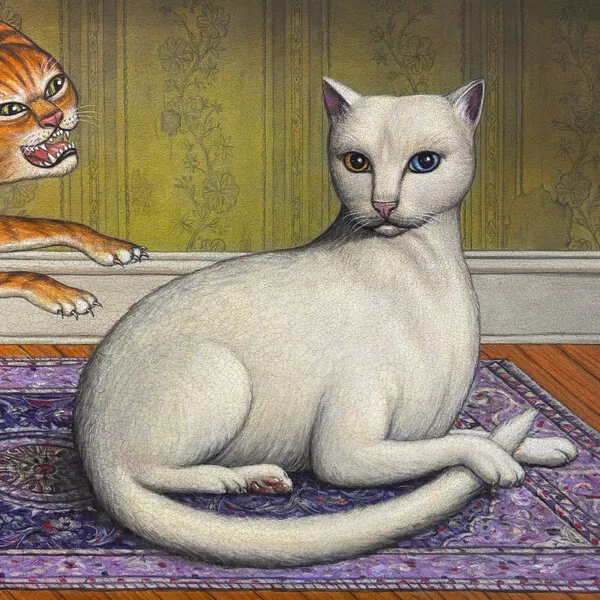
The slight spaghetti western surf motif of That White Cat is also a bit of a new look for Mitski, but it’s far easier for her lyrics and well-humoured inflections to take most of your focus – “according to CAT now it’s his house”.
Mitski is a very human writer and performer; indecision affords her a sympathy or relatability that one wouldn’t find if the artist’s output was more mechanical. Past life regression suits her – if ever her best days were behind her, she’s managed to bring them back. If you need something to tie everything together, firstly, Mitski has a one-of-a-kind voice that spasms from filtered to petrified, and secondly, her unsettled approach encourages a trademark writing style that mixes humour and bleakness in surreal scenarios. She doesn’t laugh in the face of death, but laughs behind death’s back.
Best tracks – If I Leave – I’ll Change for You – Lightning.
Rating – 8 out of 10
