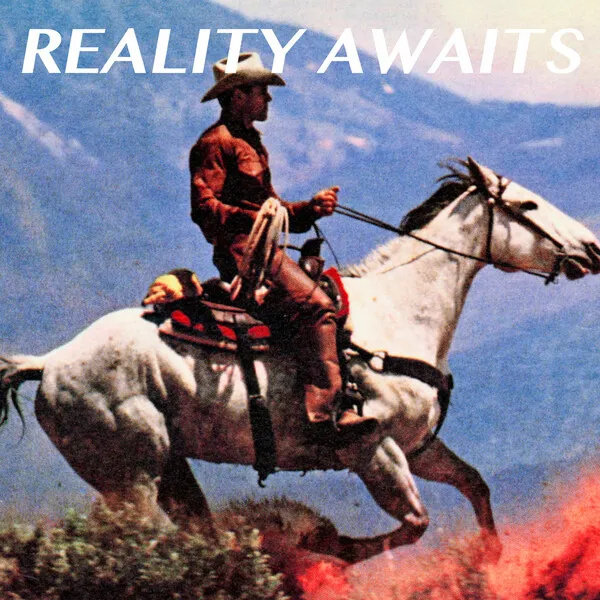
Lonely in the Future is a song destined for memedom. Diaristically paying mind to The Weeknd, John Legend, Josh Groban and the mere concept of “YOLO”; alleging Anthony Fantano doesn’t recognise art; all the while smothered in costume-y autotune with similar appeal to cheap CGI; it’s quite the stampede of silly! Offer the combo to Rivers Cuomo in the 2000s and even he would’ve passed.
Cosmetically, the song is emblematic of Reality Awaits. By “cosmetically”, I’m referring almost entirely to autotune that offers no stylistic purpose to The Strokes’ tenured, punk-ish style of indie rock, though the song also contains a ii-V-based chord progression the album loves as much as I love Biscoff, and the predictable vocal melodies that go with. Closing track Tyrants of the Mellow Moon begins like a chorused version of Radiohead’s Faust Arp, something seemingly unique, but then, bam, ii-V and autotune.
Julian Casablancas used autotune far more effectively on The Voidz’ QYURRYUS; an Arabic-krautrock-psych freakout that warranted such wildness. Reality Awaits is otherwise straight-faced, with some tracks (Going to Babble On / Going Shopping) even sounding like classic Strokes tunes, with some extra synths, and some lyrics about seven-foot zombies.
Whilst affecting the album’s serious tone, this autotune sounds obnoxious by design (though I doubt it is), encouraged by the guiding hand of the nefarious Rick Rubin, whose much-tattled loudness was at least overcome by some quality songwriting on previous Strokes collaboration, The New Abnormal.
It takes a real sucker to butcher one’s own songs like this. I wholeheartedly believe there is a good song in Falling Out of Love, which is otherwise doomed to be the album’s laughingstock. The beauty of its melodies are hidden behind the foulest makeup, from autotune to deranged falsetto. Julian butchers his own heartbreak, and distracts from Albert Hammond Jr’s stunning guitar ostinato.
Autotune at least gives Psycho Shit a bit of a pulse, a scariness even. If you can make it to the end, you might enjoy the climactic swell, featuring momentous drums with hurtling fills. Terrifying, dramatic, it is an effective presentation of America’s slimy insistence on war and violence.
Autotune is absent on Dine N’Dash – surprise, surprise, the song is actually very well-liked – which offers its own creative darkness alongside enjoyable guitar-bass overlap, a later wave of synth, and Julian’s better vocals, which combine natural histrionics and sly spoken-word sections. Gloomy and fearful, it accurately dives into the morals of a complicit bystander, watching so-called witches burn.
Dine N’Dash is only the second song on the album. It is not momentary relief, nor could it ever brace us for the Tartarus that follows. Maybe it is possible to get used to the cosmetic style of Reality Awaits, the same way one might get used to Tartarus. Therein lies the distinction between music that takes a while to get into, and music that takes a while to get used to, the former a slowness in realising the full extent of beauty in the abstract, the latter a complete lack of enjoyment before one’s Stockholm Syndrome kicks in.
I say this as somebody who hasn’t been completely turned off by the album. I don’t like it, but I’ve heard worse music. I’ve definitely never heard worse music by The Strokes, mind you.
Best tracks – Psycho Shit – Dine N’Dash.
Weakest track – Lonely in the Future.
Rating – 5 out of 10
