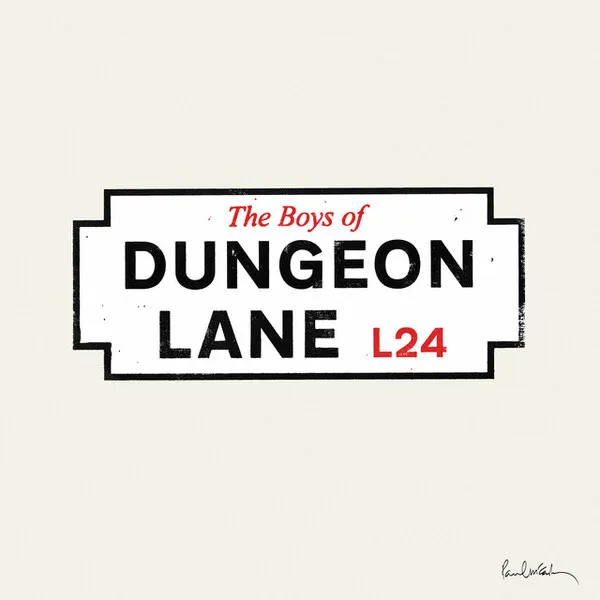
Dungeon Lane is a road in Liverpool, which is a city in England, which is a constituent country within the United Kingdom, which is a country in Europe, which is a continent on Earth, which is a planet.
Paul McCartney – who I don’t really feel the need to provide a backstory for, despite the fact that I just explained that Earth is a planet – spent much of his childhood in and around Dungeon Lane. Much of The Boys of Dungeon Lane – Paul’s twentieth solo album – was inspired by his memories in the area. His channelling of the area has sparked, perhaps vitally, an album completely devoted to memorial, sung with a ghostly crick in Paul’s voice. He still loves having fun with music – for all their faults, 2020’s McCartney III and 2018’s Egypt Station were just that – but he prefers to get serious on his latest, immeasurably humanising it in the process.
His life is basically a documentary, discussed to a degree on Elton John-esque piano rocker Come Inside. One might assume there’s little more for Paul McCartney to discuss or reveal, but hearing a ‘horse’s mouth’ detailing of his youth is far more emotional an experience than, say, watching the bits of Nowhere Boy he’s in.
Following McCartney III Imagined, on which several established musicians covered/remixed songs from the McCartney III album, Paul revisits and reminisces his greatest collaborators. He has spoken about how he sometimes writes songs with John Lennon in mind, whether or not he would’ve approved. We Two feels like the classic ode to love Paul or John would’ve written at some point in the ‘70s; spawned by loss, spurred by love, whilst a mellotron weeps.
Paul flicks through the photo album on Down South to reminisce his hitchhiking days with Geoge Harrison. As a performance, the song is extra stripped, mostly voice and guitar; a personable setting, like a story for the grandkids, delivered with an abundance of heart.
Paul reunites with Ringo Starr for the chirpy Home to Us. Ringo drums and forms some pretty great chemistry with Paul as they duet before Chrissie Hynde and Sharleen Spiteri join in. Its sentiment is echoed by Days We Left Behind; the memory of a cheerful childhood with friends and frolics, unburdened by destitution or the fallout of the Second World War. Despite Paul’s free-spirited recounting, a dusty acoustic guitar provides an accidentally bittersweet tone alongside his authentically withered singing, which is full of melody. The album feels built around the song, and understandably so; it is the sweetest not to feature a collaboration with or mention of a former Beatle.
With his head in the past, Paul gives what is likely his clearest account of his parents: Salesman Saint. A military trumpet and snare drum combo cruelly illustrate the fear of living through the war; one of the album’s most musically eccentric helpings that lovingly coincides with intricate changes in key and rhythm. In a cheeky bit of tracklist interplay (sort of like how I Will follows Why Don’t We Do It in the Road), Momma Gets By follows Salesman Saint with the suggestion of a continued parental theme, but it is, instead, an ode to the pain of woman; a fictionalised account of an unflinching woman who stays with her man no matter how lazy or unemotive he is. The strength of its string arrangement will trick you into believing this is all real to Paul – who knows, maybe it is.
Paul doesn’t necessarily use the album to remind us of his vastness as a composer, which is fine; its strength is in its storytelling, its verisimilitude. We do receive a few creative oddments, mind you; As You Lie There seems to become more and more electrified before stumbling onto a Monkberry Moon Delight-style combo of manic keyboards and tangled-up lead guitar; a harpsichord leads into Mountain Top to fit its Lewis Carroll-Lucy in the Sky psychedelia that mixes the acid trip with the childlike; Lost Horizon is a mucky hard rocker; Life Can Be Hard factors in some intricate, Bourbon Street-styled guitar-piano interplay.
Still, the album never needed those oddments. The Boys of Dungeon Lane is the soggy-eyed reminiscence I’m glad Paul McCartney made. His songwriting is still strong (the instinct and the honed), and one can easily decipher just how great a gift Paul still has to share. This is a man, who still loves writing music, writing music about a boy with a remarkable life ahead of him.
Best tracks – Days We Left Behind – Down South – We Two – Home to Us.
Rating – 8 out of 10
